
My First Dental Implant Consultation, Explained From Start to Finish
If you've been told you need a dental implant, your mind probably jumps to a dozen questions at once. Does it hurt? How much does it cost? Am I even a candidate? Do I have enough bone, and do I need bone grafting? How long does the entire process take? And what actually happens during that first appointment?
That's exactly what this guide is here to answer. We'll walk you through your first consultation, explain how implants work, and help you understand the decisions you'll make along the way so you can walk into your appointment feeling informed instead of overwhelmed.
Quick Overview
- The basics: what a dental implant is, and what tooth replacement restores beyond the gap.
- Why teeth are lost and how jawbone loss quietly changes your options over time.
- Candidacy: what determines whether implants are a good fit for you.
- The consultation itself: the exam, the imaging, the goals conversation, and the written plan you leave with. You can learn what to expect at your visit before you arrive.
- The full range of replacement options, from a single implant to full-arch solutions, snap-in dentures, and bridges.
What Are Dental Implants and How Do They Work?
A dental implant replaces a missing tooth from the root up, which is what places it apart from anything that simply sits on top of your gums. It comes in three parts:
- The dental implant: a small titanium screw placed into your jawbone. It stands in for the natural root you lost.
- The abutment: a connector that sits at the gumline and links the dental implant to the tooth you'll see.
- The crown: the visible, tooth-shaped cap, matched to the color and shape of your other teeth.
The reason implants feel so stable comes down to a process called osseointegration. Over the weeks after placement, your bone grows around and fuses to the titanium post, gripping it the way it once gripped the natural root. Titanium is used because the body accepts it readily and bone fuses to it well.
That fusion is the whole point. A tooth root does more than anchor a crown; it stimulates the bone around it every time you chew. When you replace the root with an implant, you're restoring both the tooth you can see and the daily signal that keeps the jawbone active. Bridges and dentures restore the chewing surface, but only an implant replaces the root itself, which is why it behaves so much like the tooth you started with. To learn more about the technology behind our implant procedures, explore our advanced technology page.
Why Do People Lose Teeth, and Why Does Bone Loss Change Your Options?
Teeth are lost for all sorts of reasons, and none of them say anything about how well you cared for yourself. The common causes include:
- Advanced gum disease, which slowly destroys the bone and tissue holding teeth in place.
- Deep decay or a fracture that leaves a tooth beyond saving.
- Injury or trauma.
- A failed root canal or an old, cracked restoration.
Once a tooth is gone, the bone that used to support its root stops getting the pressure of chewing. Without that stimulation, the body starts reabsorbing the bone, a bit like a muscle that shrinks when it isn't used. This can begin within months, and it keeps going quietly for years.
That's why timing matters clinically, not just for convenience. The more bone is present, the simpler implant placement tends to be. As bone thins, options can narrow, and preparatory work like grafting becomes more likely. If a dentist has told you the bone will "go down" if you wait, that's what they mean, and it's useful to know while you're deciding. It isn't a reason to feel pressured; it's a reason to get a clear look at where things stand now.
Are You a Candidate? How Implant Eligibility Is Determined
The majority of people who've lost a tooth are candidates for implants in some form, but candidacy is decided by a real evaluation, not a yes-or-no guess. A few things get weighed together:
- Bone volume and density at the site, since the post needs enough healthy bone to anchor into.
- Gum health, because active infection or untreated periodontal disease has to be handled before any implant work begins.
- Your bite and how your teeth meet, which affects where an implant fixture can sit and how it will hold up.
- Your medical history, which shapes healing more than most patients realize. Conditions like diabetes, osteoporosis, Vitamin D deficiency, and autoimmune disorders can influence how bone heals and integrates. Some medications, including certain blood thinners, long-term corticosteroids, and antidepressants, factor into planning. Smoking affects circulation and healing, so tobacco history and vaping comes up too. Prior orthodontic work or jaw surgery can also shift bone and root positions in ways that aren't obvious from the outside.
What Happens at Your First Dental Implant Consultation at Tuttle Dental Care

The exam
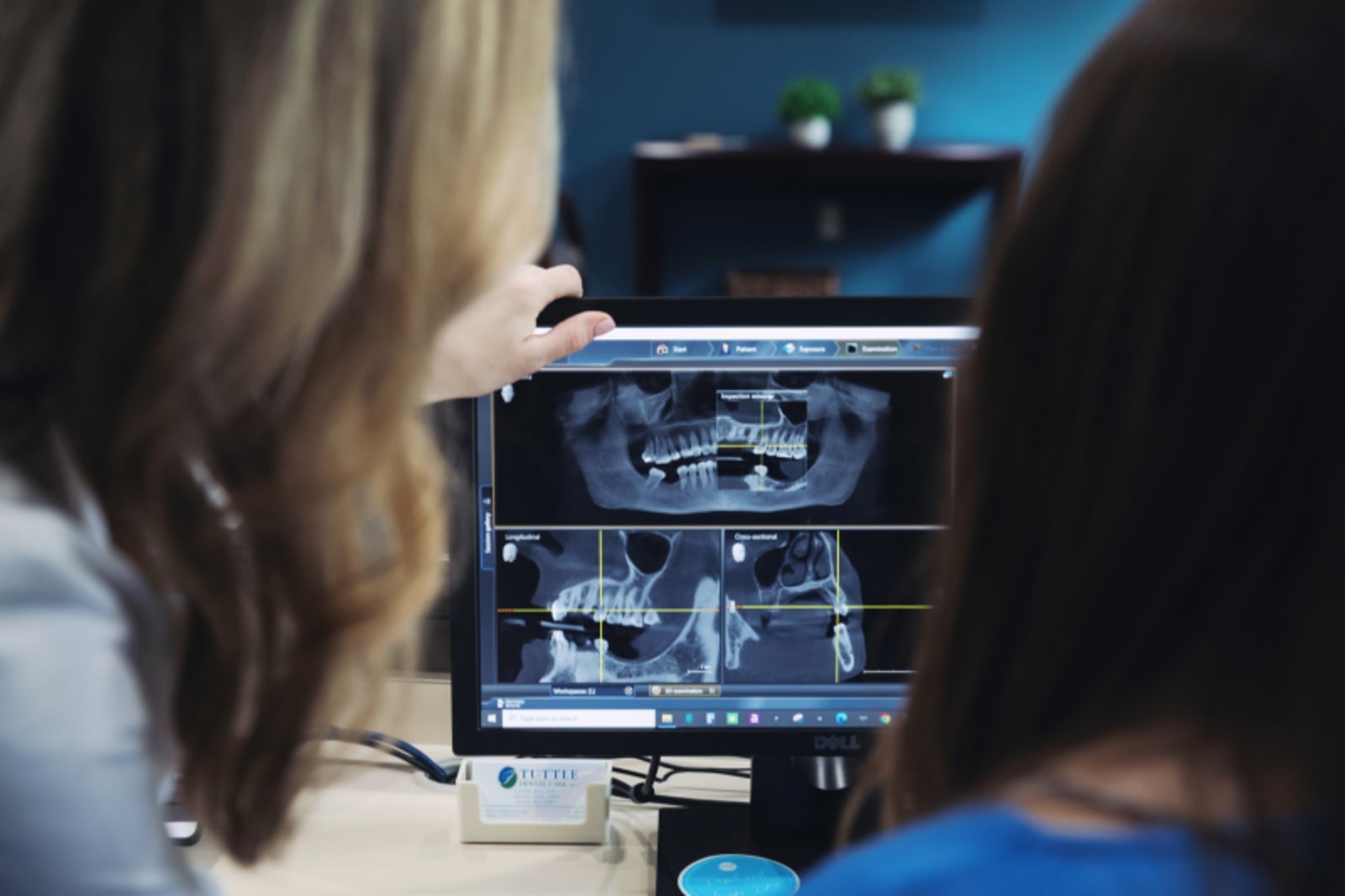
At Tuttle Dental Care, I believe the most important part of implant treatment happens before any procedure begins. During your examination, we'll evaluate your oral health, review your 3D imaging with you, answer every question, and explain all of your options—whether that's a single implant, implant bridge, implant-supported denture, or another solution. My goal is never to pressure you into treatment. It's to help you understand what's possible so you can make the decision that's right for you.
The imaging
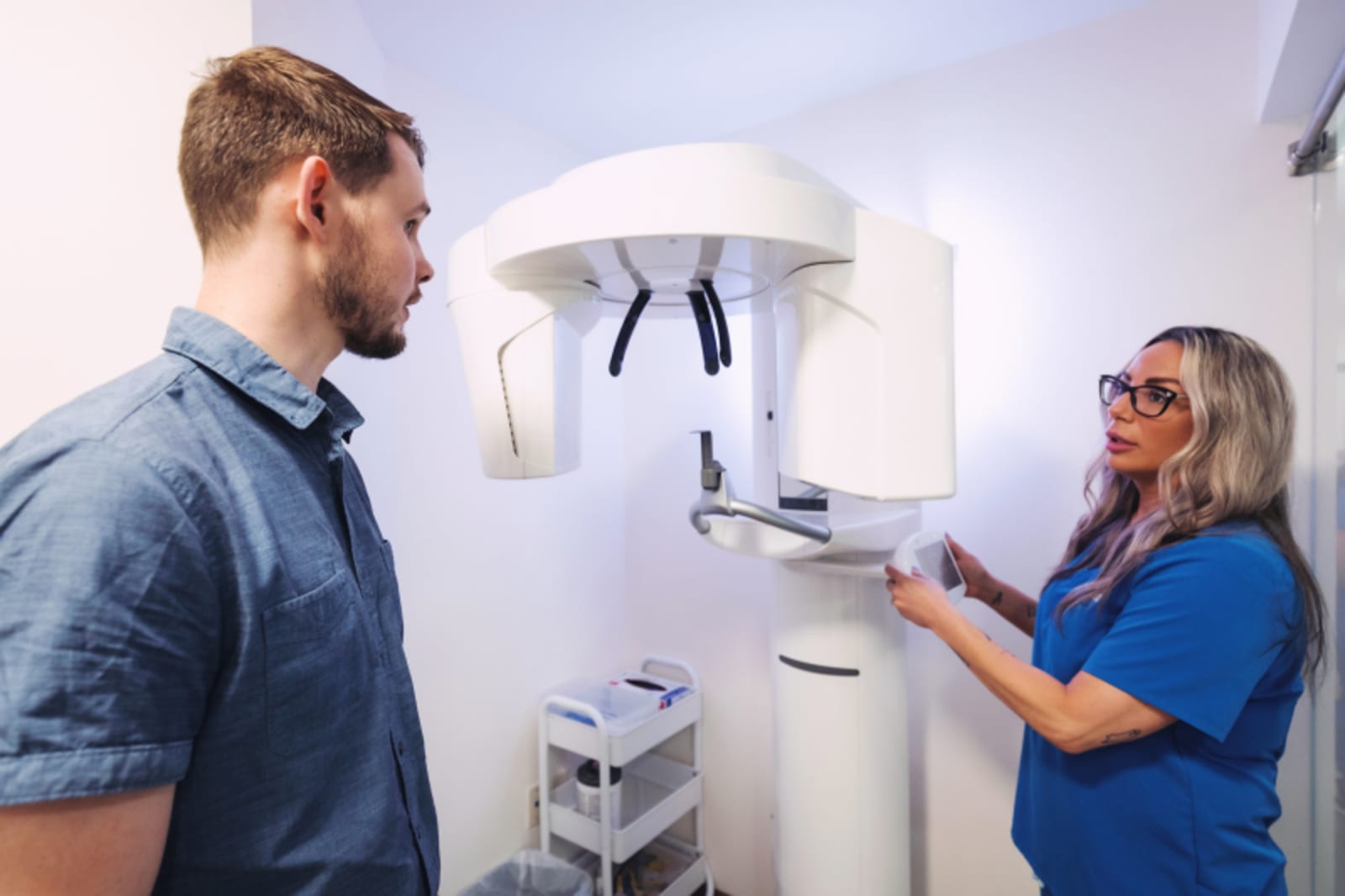
This is where a lot of the real decision-making happens. A flat X-ray only shows so much; a 3D cone beam scan produces a cross-section of your jaw, revealing bone volume, density, and the exact position of nerves and sinuses. That detail is why forum conversations about implant angle and fit exist at all: when an implant is placed even slightly off, it changes how the crown sits and feels. Precise imaging means a surgical guide built on your real anatomy instead of a best guess.
The conversation
Many patients come in after spending hours reading online about implants, bone grafting, or healing. That's completely normal. We'll help separate what's accurate from what's outdated or confusing so you leave with clear answers instead of more uncertainty. You can read more about our approach to dental implants before you come in.
The written plan and our promise to you
Before you leave, you'll have a clear treatment plan in writing — how long each procedure takes, how much it will cost, and all the options available to make treatment affordable. Many patients choose to complete treatment with oral sedation, which the team can discuss further at your visit to answer any related questions. Take your time, compare your options, and talk it over with your family if you'd like. If anything still needs to be evaluated, you'll be told exactly what and what the next steps are.
The Full Range of Tooth Replacement Options
Implants aren't a single product, and they aren't the only way to replace teeth. Seeing every option side by side helps the recommendation you eventually get make sense.
- Single implant: one implant fixture, one abutment, one crown, for a single missing tooth without touching the neighboring tooth structures.
- Implant-supported dentures: a denture that snaps onto a few implants, so it stays put instead of relying on adhesive or suction.
- All-on-Four: a full arch of fixed teeth supported by four strategically placed implants, an efficient option for someone replacing an entire upper or lower set.
- All-on-X, 3-on-6: another full-arch approach designed to give you fixed teeth on the same day as placement, so you're not left without teeth during healing.
- Traditional dentures: removable replacements that rest on the gums. No surgery, lower upfront cost, but they don't stop bone loss and can shift while eating or speaking.
- Fixed bridges: a false tooth held by crowns on the teeth on either side. Effective, though it means reshaping those neighboring teeth.
- 3-on-6: This option is 3 implant supported bridges with 6 stragetically placed implants. This option while the most expensive, tends to be the most like a natural of the full arch tooth replacement methods. In this option you will leave your day of surgery with teeth very similarly to the All-on-X approach, however their will be an additional step to convert the final prostatic that is one piece into 3 bridges to provide the most ideal gum contours (most ideal if you show a lot of gum tissue when you smile; aka - gummy smile).
Tuttle Dental Care provides implants, implant-supported snap in dentures, All-on-Four, TeethXpress, and dentures here. Bridges and standalone removable options are described so you can compare fairly, even where another route makes more sense for you. Which fits best depends on how many teeth are involved, how much bone you have, and what you want day-to-day.
How Do I Know I Need Bone Grafting? How Do I Know if I Need a Sinus Lift Surgery?
Sometimes there isn't quite enough healthy bone to anchor an implant. That's where preparatory surgery comes in, and it's more routine than it sounds.
- Bone grafting adds material to a thin or resorbed area to rebuild enough volume for a stable post. The graft acts as a scaffold, giving your own bone cells a structure to grow into and replace over the course of 3–4 months.
- Sinus lift surgery applies to the upper back jaw, where the sinus cavity can sit low over the ridge. The procedure gently raises the sinus floor and places graft material beneath it, creating room and support for an upper implant.
Not everyone needs either one, and imaging identifies early whether it's likely. When grafting is part of the plan, it happens before placement and adds a healing stage to the timeline. For more involved cases, a sinus lift can be combined with advanced full-arch work so the whole sequence is coordinated rather than pieced together. Bone and sinus grafting are handled in-house, so you're not sent to a separate surgical office partway through your dental implant treatment.
Sedation and Comfort Options for Implant Treatment
We offer oral conscious sedation, which is medication taken to keep you calm and relaxed while you stay awake and responsive although you won't have much of a memory of the procedure. For many people, it takes the edge off enough that a procedure they'd been dreading becomes very manageable.
A common and fair question is whether sedation is safe if you have something like high blood pressure or another ongoing condition. This is exactly why the medical history review counts so much. Your health picture, current medications including GLP-1s, and blood pressure all factor into whether sedation is appropriate and which approach is safest. If sedation isn't the right call for you, we'll say so and find another way to keep you comfortable. Nothing about your comfort plan is one-size-fits-all. If you have questions about your options, reach out to our team at (609) 799-2929.
What the Implant Process and what does Recovery Involve
Implant treatment happens in stages spread over months, and knowing the map upfront keeps you from feeling caught off guard partway through. A typical sequence looks like this:
- Preparation: any extraction, gum treatment, or grafting needed before placement have a short healing period of anywhere between 3-4 months - If the tooth needing to be replaced is in your smile zone we can create a temporary appliance for you to wear to help you still present yourself confidently in public.
- Placement: the post the post is set into the bone. Most people are surprised by how manageable this stage is, and by how little discomfort follows once the numbness fades. Many do not need pain medications such as over the counter items like acetaminophine or ibuprofen more than one day if at all.
- Healing and integration: the quiet, important stretch where bone fuses to the dental implant. This is measured in months, not days, and iwe can't rush biology. can't be rushed.
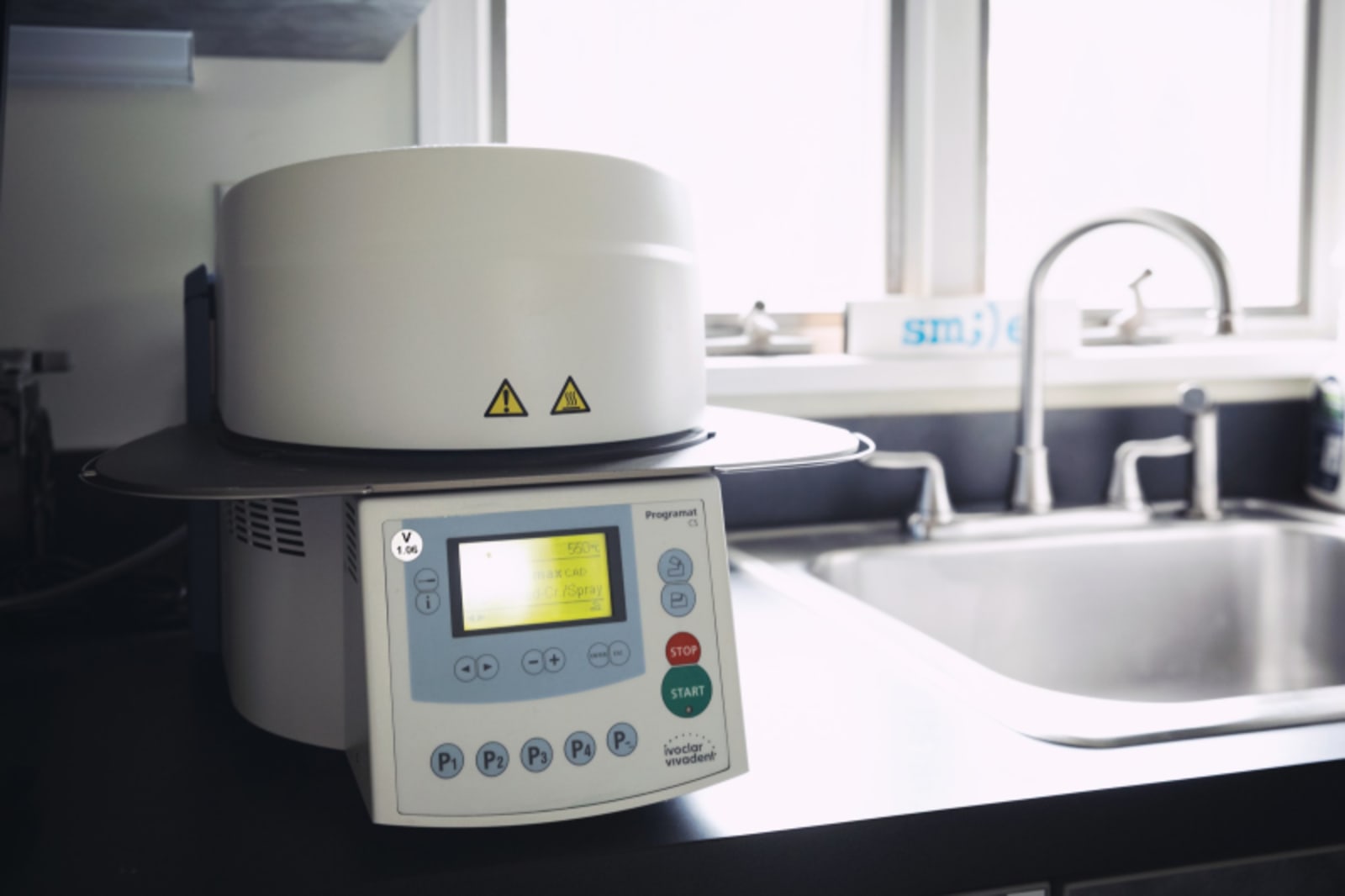
- Restoration: once integration is confirmed, the abutment and final crown go on, and the tooth is complete we utilize our digital scaners like cerec primescan to capture the most precise details and can make your crown in our office.
Recovery after placement is usually milder than people expect: some swelling and soreness for a few days, managed with straightforward aftercare and softer foods for a bit. You'll get clear instructions on what to do, what's normal, and when to eat normally again. Healing looks a little different for everyone, so we'll give you a timeline based on your individual case instead of relying on averages. To start with a plan built around your situation, reach out to our West Windsor Township team or learn more about our approach to dental implants.
How much does my Dental Insurance Cover?
Implant costs vary based on how many teeth you're replacing, whether preparatory work like grafting or a sinus lift is needed, and the materials and sedation involved. Before you leave, you'll receive a written treatment plan outlining every step, timeline, and cost.
We participate with Delta Dental Premier and will review what your coverage applies to. Our membership plan is also available. Dental insurance typically covers portions of dental implant treatment, not the full cost. Questions? Call us at (609) 799-2929.
Questions to Ask and How to Schedule Your Consultation
One of the things Dr. Tuttle hears most often from patients is, 'I wish I had done this sooner.' By the time someone comes to see me, they've usually spent months—or even years—wondering if implants are the right choice. My goal during your consultation isn't to convince you to move forward. It's to answer your questions honestly, explain every option, and help you make the decision that's best for your health, lifestyle, and budget.
A good consultation goes both directions. You're being evaluated, yes, but you're also gathering what you need to decide with confidence. These are worth asking at your appointment:
- What does my timeline realistically look like? Ask for a milestone map so nothing surprises you mid-process.
- Will I need bone grafting or a sinus lift first? Better to know early if preparatory work is likely.
- What happens if the implant doesn't integrate? It's uncommon, but ask what the next steps and any added costs would be.
- How is the crown chosen? Material, shade, and fit all shape how natural it looks. Ask whether you have input.
- What does recovery actually involve? Downtime, discomfort, and when you'll eat normally again.
- What's included in the quote, and what could add to it?
To help the visit run smoothly, it helps to bring any prior dental records or X-rays you have, a current list of your medications and supplements, notes on anything you've noticed like sensitivity or a tooth that feels like it's shifted, and your insurance card so the front desk can check your benefits. If a dentist has already told you bone loss is a concern and timing matters, mention that first so the team can prioritize it.
You can read more about our approach to dental implants and what to expect before your visit.
At Tuttle Dental Care, the most important part of implant treatment happens before any procedure begins. Dr. Caroline Tuttle has completed advanced implant training and performs dental implant surgery, bone grafting, sinus augmentation, full-arch implant rehabilitation, and immediate-load procedures in-house. When you come in, you'll receive a full, comprehensive plan because the doctors here are trained in all the options, possible complications, and predictable outcomes—so you can make the best-informed decision for your life.
The goal is never to pressure you into treatment. It's to help you understand what's possible so you can make the decision that's right for you. Booking a consultation is not a commitment to treatment, which trips up a lot of people who put off scheduling.
